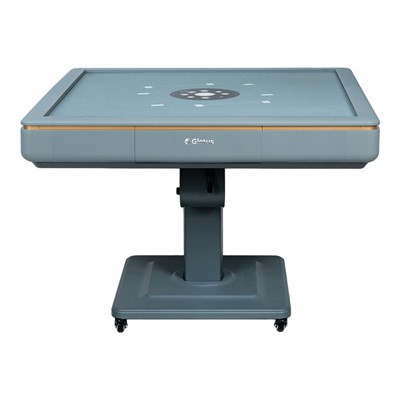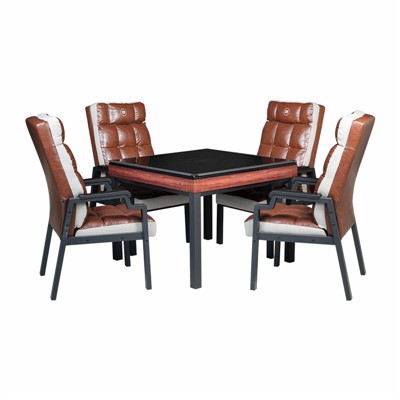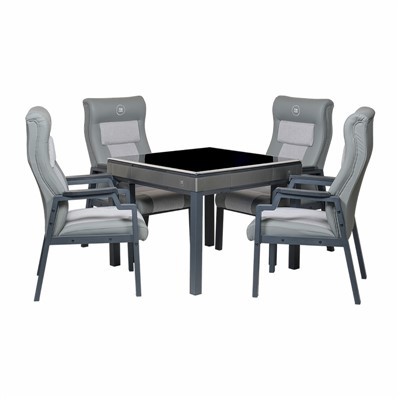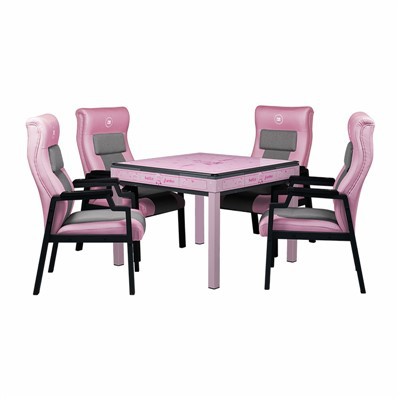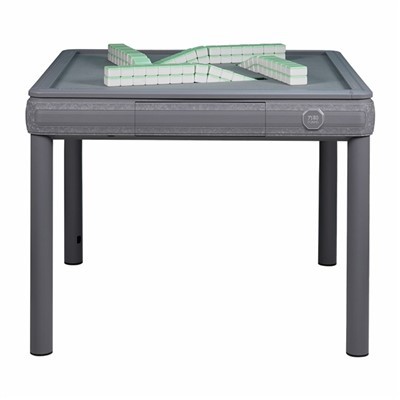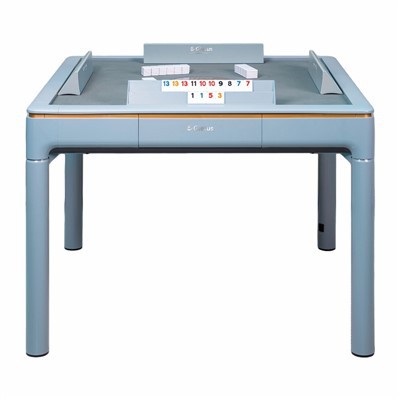

The core technology of modern fully automatic mahjong machines is achieved through the coordinated operation of six major systems: a shuffling system, a stacking system, a conveying system, a lifting system, a central lifting system, and a circuit board control system.
Mahjong tiles contain embedded magnets (usually permanent magnets), and sorting is achieved using the principle of attraction between opposite poles and repulsion between like poles. The tiles rotate on an inclined disc. When a tile rises to a high position, its core component, a tile-collecting wheel, is equipped with magnets oriented opposite to the magnets inside the tile. When a tile with its face up (usually containing the N/S poles of the magnet) passes by, the opposite poles attract it, and it is attracted away; when a tile with its face down passes by, the like poles repel it, and it is pushed back onto the disc.
Magnets are also installed at specific locations on the bottom of the disc. Through a secondary repulsion of like poles, the tiles are flipped over and then picked up by the subsequent tile-collecting wheel. The cards, once attracted, are moved to a slot by a rotating ring and pushed away by a lever. Cards facing up continue rotating on the disc. Once the cards in the slot are doubled, they are distributed to the four sides by a pusher. A small spring on the disc flips the cards, causing the face-up cards to face down so they are attracted by the iron ring with their backs facing up, until all the cards are in the slot and taken away. Once the required number of cards are reached for each side, a person operates a button, and a tray beneath the cards sends the stacked cards onto the table.